
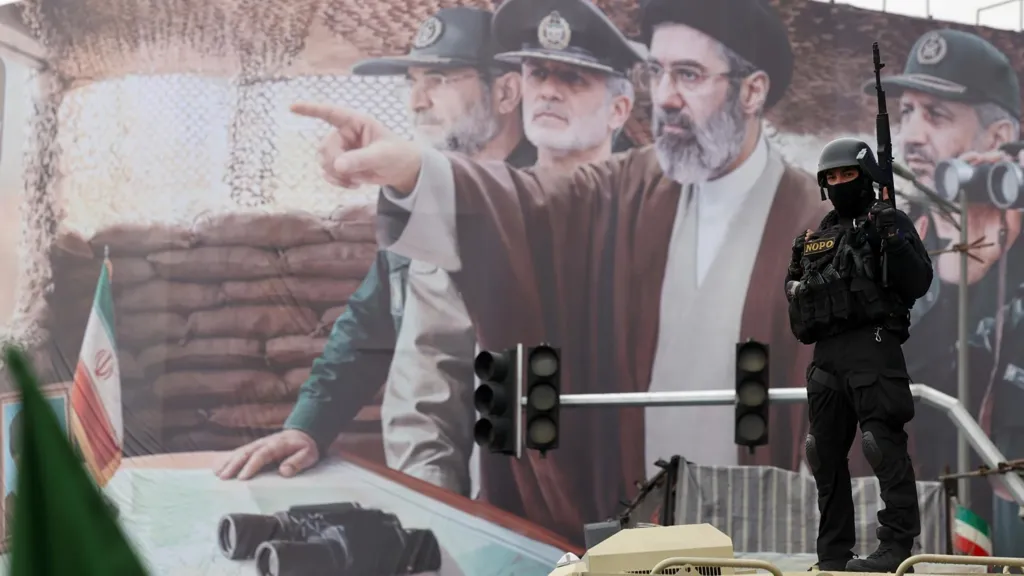
As hopes for regime change in Iran begin to fade, Israeli Prime Minister Benjamin Netanyahu now faces a critical political test at home. Israeli leaders are increasingly emphasizing the broader strategic gains of the war with Iran, even as the central goal Netanyahu repeatedly highlighted—the fall of the Iranian regime—appears increasingly unlikely.
For decades, Netanyahu has positioned Iran as Israel’s most dangerous adversary. His political career has long been defined by his pledge to confront Tehran and neutralize what he sees as a growing existential threat to Israel. When the opportunity came to wage direct war against Iran alongside the United States, Netanyahu framed it in sweeping historical terms.
He described the conflict as “a fateful campaign for our very existence,” language echoed by Israel’s military leadership. The Israeli army’s chief of staff portrayed the campaign as an effort to secure Israel’s future in what he called “the land of our forefathers for generations to come.”
Among Netanyahu’s allies, the war has also been portrayed as a rare strategic moment. One of his former national security advisers called it “a golden opportunity to change the direction of the whole Middle East.”
According to Tel Aviv–based journalist and policy adviser Neri Zilber, Netanyahu has attempted to frame the conflict as part of a broader historic struggle.
“This is the culmination of what he has tried to rebrand as the War of Redemption, which in his mind began after the October 7 attacks,” Zilber said. “If not the final war, then the major confrontation with Iran.”
Despite mounting evidence that the Iranian political system is holding together, Netanyahu continues to present the war as a strategic triumph. Israeli officials argue that the conflict has significantly weakened Iran’s regional influence and shifted the balance of power in Israel’s favor.
Earlier in the war, Israeli leaders openly discussed the possibility that Iran’s leadership could collapse. The assassination of Ali Khamenei in an airstrike was seen as a potential turning point. Netanyahu even urged ordinary Iranians to seize the moment and rise up against their government.
A regime change in Tehran would have dramatically altered the security landscape. Iran’s allies—such as Hezbollah in Lebanon and Hamas in Gaza—depend heavily on Iranian funding, training, and weapons. Removing the regime could have weakened these groups and reshaped regional dynamics.
But in his first press conference since the war began, Netanyahu signaled a shift in expectations. While he stopped short of claiming victory, he argued that the war had already reshaped the region.
“We can already say with certainty,” he told Israelis, “this is no longer the same Iran, this is no longer the same Middle East, and this is not the same Israel.”
The question now facing Netanyahu is whether that narrative will be enough. With the Iranian regime still standing, the Israeli public—and Netanyahu’s political rivals—may soon begin asking whether the historic confrontation he long promised truly delivered the transformative outcome he envisioned.
Leave a Reply